An Italian villa garden looks effortless in June. It is not. The clipped box, the cypress avenue, the rows of lemon pots along a balustrade — all of it rests on work done in months when almost nobody is there to see it. Historic gardens are not maintained by grand gestures but by small, repeated ones, timed to a calendar that the Mediterranean climate wrote long before anyone thought to print it.
That calendar is worth knowing whether you look after a garden of your own or simply like walking through other people's. It explains why the parterre looks razor-sharp in April and tired in August, why the citrus disappears in November, and why the best time to read a garden's bones is the week after Christmas.
January and February: The Structural Months
Cold, bare and quiet — and the most consequential weeks of the year. With the sap down and the leaves gone, you can see what you are doing. This is when fruit trees and olives are pruned, when the wisteria gets its winter shortening (long whippy growth cut back to two or three buds), and when roses are cut properly rather than merely tidied. It is also bare-root season: roses, hedges, trees and hedging whips go in now, while they are dormant, and settle before the heat arrives.
The garden's skeleton is on show. Box parterres read like line drawings, cypresses hold the wind, and a stone bench that is invisible under June growth suddenly becomes the best seat on the property. In the south, almond blossom can open before February is out.
Under cover, the citrus in the limonaia needs attention: ventilation on mild days, sparing water, and a check for scale on the undersides of leaves. Tender pots left outside get wrapped or moved. Tools get sharpened, because a blunt blade tears a stem and a torn stem invites disease.
Jobs that cannot wait
- Prune olives and fruit trees before growth restarts.
- Plant bare-root roses, trees and hedging.
- Clear gravel paths of weeds before they seed.
- Check drainage and clean gutters before the spring rains.
- Wrap terracotta pots against hard frost.
March and April: Everything at Once
Spring in central Italy does not arrive so much as detonate. Grass starts growing, weeds double their ambition, and every job in the notebook becomes urgent in the same fortnight. The first lawn cut is deliberately high — taking too much off in one pass stresses the grass — and mowing edges get re-cut so the garden's geometry reasserts itself.
Finish rose pruning early in the month, then feed and mulch. Stake peonies before the buds get heavy, and get the irrigation system checked and repaired now, when a broken line is an inconvenience rather than a catastrophe in July. Box is usually left alone until the risk of hard frost has passed; clipping it into a cold snap leaves brown patches that take a season to grow out.
Wisteria comes into flower, fruit blossom follows, and the first irises open along the walls. Pots begin to leave the limonaia, but gradually — a cold night in early April still catches people out.
May and June: The Long Build to the Peak
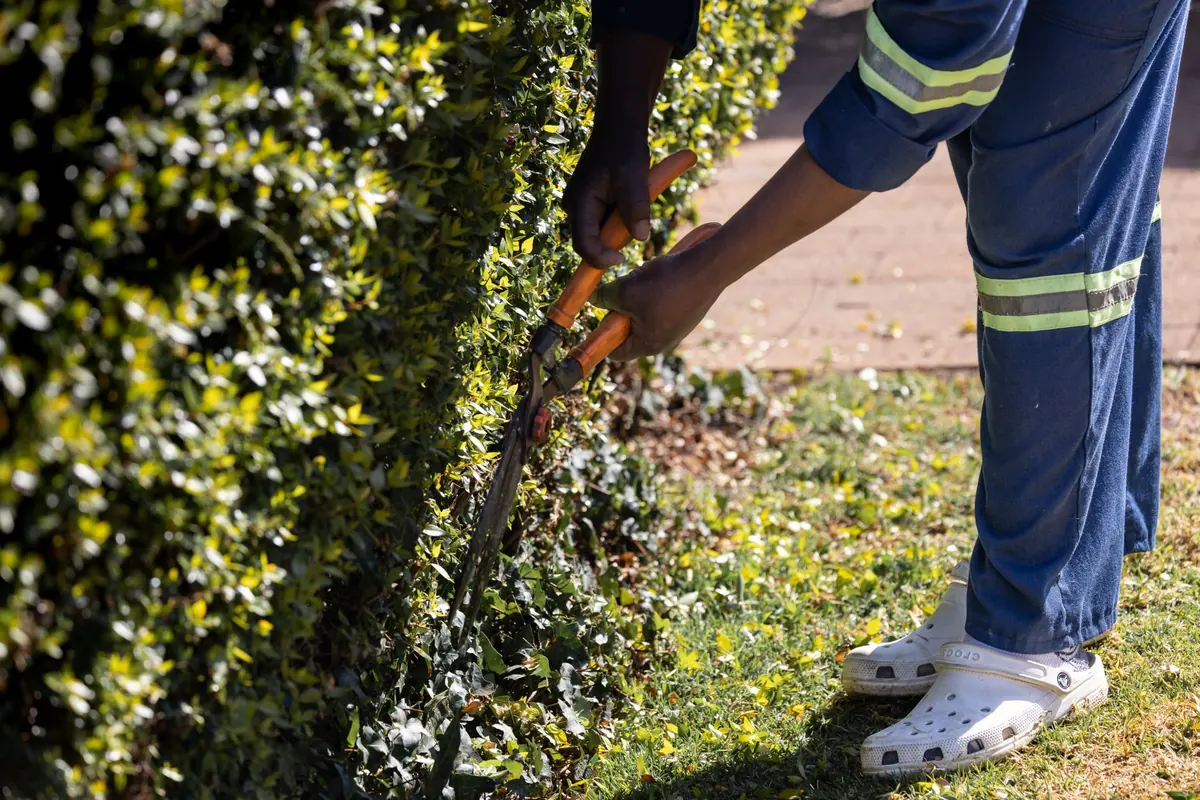
This is the stretch that decides how the garden will look for the rest of the year. Hedges get their first proper cut of the season, done in the morning rather than the heat of the day. Roses are deadheaded, fed and watched: aphids first, then the fungal problems that follow a wet May. Lavender is trimmed after flowering, but never cut back into the old bare wood, which rarely regrows.
Watering becomes a discipline rather than a reflex. A deep soak twice a week does more than a light sprinkle every evening; it sends roots down instead of encouraging them to sit at the surface. Water early. Mulch afterwards to hold what you have given.
By late June the garden is at full volume — roses, philadelphus, the first lavender, water lilies opening on the pond — and the work is mostly a matter of keeping the whole thing from tipping into chaos. Visitors see abundance. Gardeners see a to-do list.
July and August: Restraint
The temptation in high summer is to do too much. Resist it. Do not hard-prune in a heatwave, do not feed plants that are already stressed, and raise the mowing height rather than scalping the lawn into straw. Pots and newly planted specimens need daily attention; established olives, cypresses and stone pines need almost none.
Keep deadheading, keep watering, and watch for powdery mildew on susceptible plants in still, humid weather. Box caterpillar and box blight have changed how many historic gardens manage their parterres; where the risk is high, clipping is timed carefully and plants are checked regularly rather than treated on a fixed schedule.
What visitors observe now is the garden's intelligence: shade offered by a bosco planted centuries ago, water moving through a fountain that was designed as cooling infrastructure as much as ornament. The dry grass is not neglect. In a Mediterranean garden, a lawn that stays green in August usually means someone is paying for it.
September to November: The Real Planting Season
Autumn is when Italian gardens are quietly remade. Soil is warm but the air has cooled, which is exactly what roots want. Prepare beds with well-rotted organic matter, divide perennials, plant bulbs through October and November, repair bare patches of lawn and overseed while the ground is still warm.
This is also the season to think in decades. Trees and shrubs planted now have the whole winter to establish. Bare-root roses ordered for late autumn usually outperform anything bought in spring.
- Clear the planting position and fork over the base of the hole.
- Set the tree at the same depth it grew before — the old soil line should stay visible.
- Stake low and loosely, so the trunk can still move and thicken.
- Water in thoroughly, then mulch, keeping mulch clear of the trunk.
Before the first frosts, the citrus comes back inside. Rake leaves into a wire frame to rot into leaf mould. Harvest the olives. Clean and store the irrigation lines. Every one of these jobs is unglamorous and none of them can be done later.
December: Closing the Year
The garden empties out and shows its structure again. Finish the leaf clearing, prune in mild spells where it is safe, service the tools, and check anything in storage — dahlias, tubers, pots of tender plants — for rot or mice. Order bulbs and seeds for next year while the catalogue is still open and the memory of what failed is still fresh.
Visit a villa garden now if you can. Winter light is low and long, and the evergreen architecture — holm oak, laurel, cypress, box — finally reads clearly without the distraction of flowers.
How to Use This Calendar as a Visitor
Aim for the shoulder seasons. Late April and early June give you roses and freshness without the crowds; late September gives you light, warmth and a garden that has survived. Go early, when gardeners are working and hedges are still sharp, and do not be shy about asking what is being cut and why — most are generous with answers.
And read the garden for signs of the calendar. Freshly clipped edges mean a cut happened within the week. New stakes and tree ties mean planting. Bare soil under a hedge means someone is about to mulch. None of this is accident; all of it is the quiet, patient arithmetic of a garden that has been kept going for centuries, one ordinary month at a time.
Photo: Magda Ehlers / Pexels