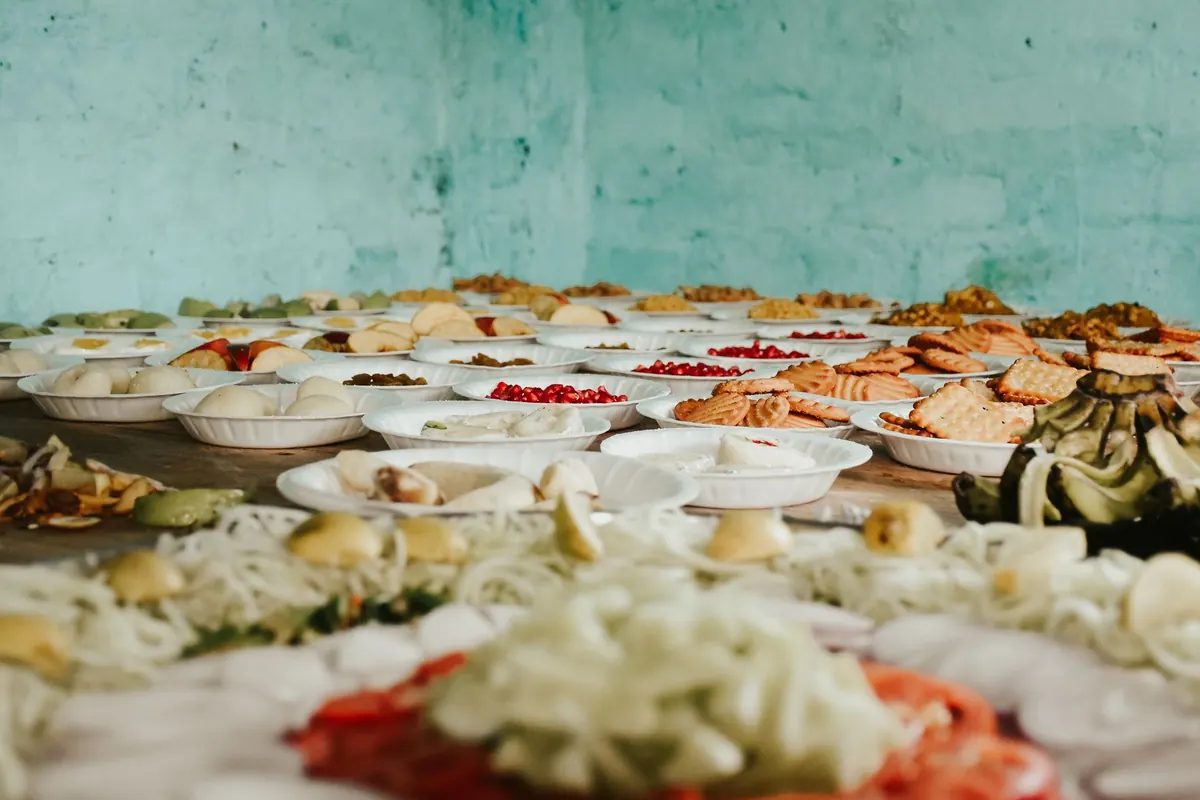
By seven in the evening the air in the square has changed: wood smoke, frying oil, and a band tuning up somewhere behind the church. Folding tables appear where cars were parked an hour ago. Someone's uncle is carrying a tray of glasses he clearly did not volunteer to carry. A village feast — a sagra, a festa patronale, the feast of the local saint — is not a show staged for visitors. It is a household chore performed in public, and the household has been at it for generations. You are welcome in it. You just need to know where to stand.
Dress for the Church and the Courtyard
Two events usually share the same day: a service in the parish church and several hours outdoors on cobblestones, gravel, or a field. Dress for both, and keep a light scarf or shawl in your bag — it solves the church question in ten seconds, and it earns its keep when the evening turns cool.
Leave the beach behind. Vests, flip-flops, and shorts that stop well above the knee look out of place on the church steps, and villagers often dress considerably better than visitors expect: the older women in their good dresses, the men in a pressed shirt even in August. You do not need to match them, but crumpled hiking gear reads as indifference. Wear shoes you can stand in for two hours, because you will be standing, and choose something you would not grieve over if it met a paper tablecloth full of tomato sauce.
Timing: Arrive When the Village Arrives
Find the programme first. Feasts still announce themselves on photocopied flyers taped to the bakery window, on the parish noticeboard, and on the town council's website. It will tell you when the Mass begins, when the procession leaves, when the stalls open, and roughly when the fireworks go up. Read it before you plan your evening, not after.
Then accept that the schedule is a suggestion. Food service may start at seven and peak at nine; the queue for the grill will be longest exactly when you are hungriest. Locals eat late and take their time, so arriving at eight-thirty and staying until eleven is closer to the rhythm of the evening than turning up at six-thirty and leaving by eight.
The procession is not a shortcut
If you arrive while the band and the statue are moving through the streets, stop and wait. Do not walk through the procession to reach a bar, do not step into the gap between the banner and the marchers, and do not stand in the church doorway during the service. Wait at the edge until it has passed, then carry on. Nobody will tell you off; they will simply notice.
Ordering, Sharing, and Eating Like a Guest
Feast food is short by design. One stall does one thing well — gnocchi, porchetta, fried dough, polenta with sausage — and the menu is short because the volunteers can only cook so much of it. This is not a restaurant, and asking for substitutions or "something without sauce" lands badly.
- Look for the handwritten signs and the longest line of locals. That is where the good dish is.
- Buy tokens first if there is a cassa. Many feasts sell tickets or tokens at a separate window; ordering at the grill and waving money at the wrong volunteer slows everyone down.
- Carry small notes and coins. Change runs out fast, and card machines are rare in a field.
- Order the dish the stall is named for. It is what they are proud of.
- Say please and thank you, and try the greetings. A buonasera and a grazie go a long way with someone who has been on their feet since noon.
- Ask before joining a table that is half full. A raised eyebrow and "permesso?" is enough; the tavolata is normally shared, and you will probably be waved onto the bench.
- Clear your own glasses and trays. Find the collection point or the washing station; nobody is paid to bus your table.
If the people beside you push a plate toward you and insist you taste something, taste it. Refusing offered food is a small rudeness; taking one bite and saying "complimenti" is the whole etiquette in one gesture. Toast with eye contact, and keep the pace gentle — the point of the evening is the sitting, not the eating.
The Sacred Parts Are Not Attractions
Most feasts begin with a Mass and a procession, and for the people carrying the banner this is the reason the rest of it exists. Follow the crowd's lead: stand when they stand, stay quiet when they are quiet, and keep your distance from the relics, the statue, and the embroidered banners being carried past. Photography belongs to the other half of the evening. In church, phones away, flash off, no wandering down the aisle for a better angle. If you are unsure whether a moment is sacred or social, watch the oldest person present and copy them.
Photography: Ask, Then Ask Again
Lanterns, paper garlands, a grill full of smoke, a child with sugar on their face — the feast is generous with photographs, and nobody minds you shooting the food, the decorations, or the empty tables being laid. People are different. Ask before a portrait, even a candid one, and accept a shrug or a turned shoulder as an answer. If someone raises a hand or looks away, that is the answer too.
Ask the stallholder before photographing them at work, and buy something afterward whether or not they said yes. Do not stand on benches, block the aisle, or hold up a phone during the procession or the band. And put the camera down for the ten minutes around the fireworks and the final parade — you will remember the noise and the smell of it better than the picture.
Paying, Helping, and Saying Goodnight
Volunteering is welcome; grabbing a job is not. If you want to help, ask a person with a clipboard or an apron. Carrying stacked chairs at the end of the night is always needed, and buying a raffle ticket or a slice of cake from the parish stand supports the thing you came to enjoy. Tipping is not expected in this setting — buying a drink for the person who served you is friendlier. When you leave, thank the people at the stall by name if you learned it, and say goodnight to the table. In a village of eight hundred, you will be recognised next year.
A Five-Minute Checklist Before You Go
- Check the programme for Mass, procession, and food times — and add an hour to everything.
- Wear covered shoulders, modest shorts or a skirt, and flat shoes; bring a scarf and a layer.
- Take cash in small notes, plus a bag for anything you buy.
- Learn four words: buonasera, per favore, grazie, permesso.
- Plan to share a table, wait in line, and eat later than usual.
- Ask before photographing faces, and pocket the phone during the procession.
- Stay for the clearing up, or thank the organisers before you slip away.
Do those seven things and you will be treated less like a visitor and more like someone who happened to be in town on the right evening — which, for one night, is exactly what you are.
Photo: Afzal Khan / Pexels