The band arrives first, a thin thread of brass somewhere behind the houses. Then comes the smell of frying dough, then the string of bulbs slung across the alley, and by eight in the evening half the village is standing in the same small square. Nobody printed a programme for you. That is rather the point.
A village festival in Italy is not an event staged for visitors. It is a community talking to itself in public — about its saint, its harvest, its grandparents and its children. Learn to read one properly and you will understand more about a place in three evenings than in three weeks of museums.
A Festa Is Not a Performance
Most village celebrations are run by a handful of people: the parish, the local Pro Loco association, a festival committee, sometimes a confraternity whose members have carried the same banner for decades. The same surnames appear on the organising list year after year, and their children grow up handing out plates.
This matters for how you behave. The woman ladling soup at ten at night is not staff; she is someone's aunt who has been on her feet since six. Money raised goes back into the parish, the committee's next edition, or the village band. When you buy a plate of pasta you are, quite literally, a guest in someone's living room. That single fact explains the prices, the welcome and the occasional briskness when a table is full.
The Patron Saint Sets the Calendar
Every comune has a patron saint with a fixed feast day, and that date quietly organises the year. Families plan holidays around it. Adults who moved to Milan or Bologna for work come back for the weekend. The bakery makes a specific cake, the butcher prepares a specific cut, and the square gets a stage it does not otherwise have.
The pattern is fairly consistent. Morning Mass, then a procession carrying the saint's statue on the shoulders of volunteers along a route that often pauses at a chapel, a crossroads or the house of the oldest resident. A band plays. Confraternity members wear their robes and cords. Afterward comes lunch with relatives, then a long slow afternoon, then music and fireworks. The religious part is not decorative — it is the reason the rest exists.
If you join a procession
Stand to the side and let it pass. Do not walk in the middle of it, do not cross in front of the statue, and do not use a flash inside a church. Dress as you would for a family occasion rather than a beach. Keep children from running through the line, and follow the locals when you are unsure whether to stand, sit or sing. Photographs outdoors are usually fine; ask before pointing a lens at someone's face, and never during prayer.
The Sagra: A Menu That Says Who You Are
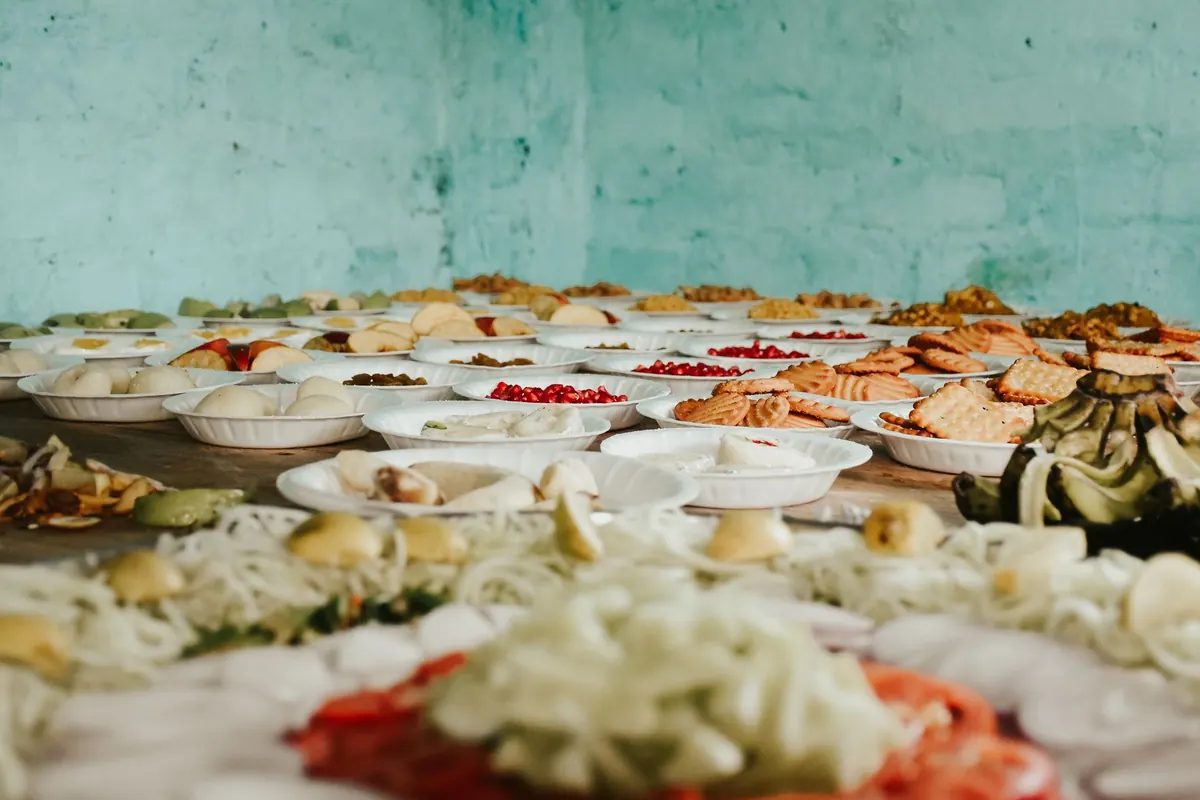
The sagra is the food side of the same instinct — a festival built around one product or one dish, and deliberately narrow. You will find tortelli di zucca on the Po plain, porchetta through Lazio and Umbria, fish festivals on the coast, chestnuts and polenta in the Apennines, wild boar when the season turns.
The short menu is the message. A village that cooks only one thing is telling you what it grows, what it remembers and what it is proud of. Volunteers prepare it over several days, often in a kitchen borrowed from the parish hall. You order at a cash desk, take a ticket, find a place at a long communal table, and eat next to people you have never met. That is not a flaw in the arrangement. It is the arrangement.
Go early if you want a seat and quiet, late if you want the atmosphere. Bring cash in small notes. Vegetarian choices are often limited to a pasta al pomodoro or grilled vegetables, so ask rather than assume, and do not expect the kitchen to improvise.
Rituals That Make Community Visible
Some celebrations are spectacle: a palio with horses, a race with donkeys, flag-throwers in Renaissance costume, a bonfire lit in January for Sant'Antonio. Others are almost invisible to outsiders — a table of older men singing house to house in exchange for eggs and wine, a wheat harvest blessed at Mass, a boat of flowers carried to the water.
All of them do the same work. They distribute status: the boy who carries the banner learns that position in the line matters. They test reciprocity: who cooks, who cleans, who drives the van. And they mark who is still connected to the place and who has drifted away. Watch the order of a procession closely and you are watching a village's social map being drawn in public, once a year, for free.
What the Square Tells You
Stand still for twenty minutes and read the room. Who is in the kitchen and who is seated at the front? Which age groups are missing, and does that tell you about work and emigration? Is the band made up of teenagers or of men in their sixties? Does the announcer speak dialect, Italian, or both? Is there a moment of silence for someone who died this year?
Then look at the notices. The photocopied poster in the bar, the parish bulletin and the handwritten sign at the bakery will tell you more about local priorities than any tourism website. Ask the person behind the counter what time the procession leaves. You will get a precise answer, a small history, and probably an invitation.
Practical Notes Before You Go
- Find the real date. Check the comune website, the parish noticeboard, the Pro Loco pages and the bar. Feast days move with Easter and with the local harvest, so confirm rather than guess.
- Park outside and walk in. Village centres are narrow and closed to traffic during festivals. Arrive before the streets fill.
- Split your evening. Attend the procession seriously, then stay for the tables. The two halves belong to different moods.
- Carry cash. Card readers are increasingly common but not guaranteed at a temporary food stall.
- Dress with a little care. Cover shoulders inside a church. Leave the flip-flops for the beach.
- Eat what is offered. Ordering off-menu in a volunteer kitchen rarely goes well for anyone.
- Learn six words. Buonasera, per favore, grazie, posso?, quando inizia? and buonissimo. They will carry you a long way.
- Accept invitations. If a family waves you toward their table, say yes. This is the whole reason to be there.
- Do not compare it aloud to a festival you saw elsewhere. It is not a competition, and it is not a product.
Nothing here requires special knowledge, only a bit of patience and the willingness to be the outsider in a room where everyone else has known each other since childhood. The festival will not adapt itself to you. Go as a guest, stay until the lights come down, and you will leave with a far clearer sense of what an Italian village actually is — and, quite often, with an address to write to.
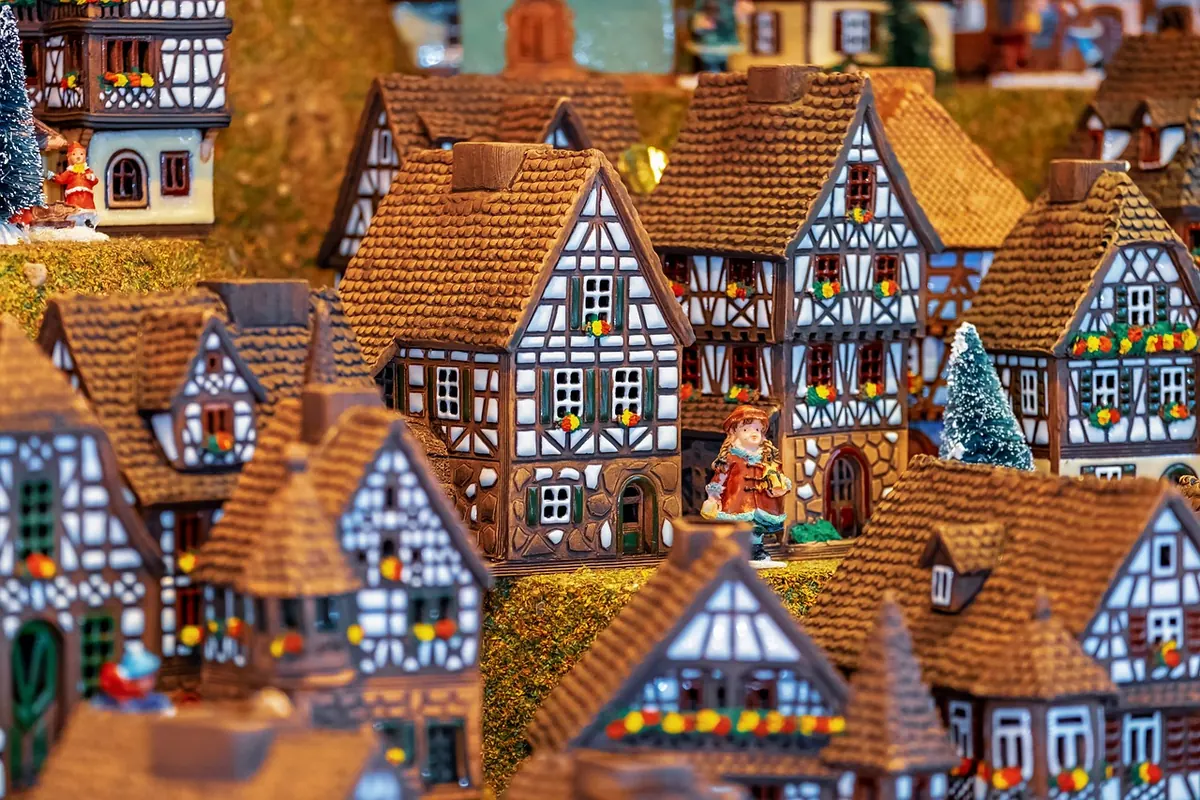
Photo: Couleur / Pixabay