Half a day is enough. That is the most useful thing to remember about walking from Salice Della Torre: you do not need a full expedition to spend three or four hours among olive terraces and stone lanes, and you do not need much equipment beyond a decent pair of shoes. What you do need is a little planning, most of it done the evening before. Think of the walk below as a template rather than a fixed route — a loop of five to seven kilometres, roughly two and a half to three and a half hours including stops, following the tracks that leave the village and curl back to it without ever taking you far from a farmhouse or a road.
Choose the shape of your route first
Before you worry about footwear or water, decide what the walk actually looks like on the ground. Most satisfying half-day routes are loops, because a loop removes the temptation to keep going. An out-and-back walk has a way of stretching itself: the far point keeps moving, and a three-hour plan quietly becomes five.
Pick a loop of five to seven kilometres with no more than two or three hundred metres of cumulative ascent. For most reasonably active people that is a comfortable half-day with time to stop, look at things and eat something. Ten kilometres is not a half-day. It is an afternoon with consequences.
Find your halfway point before you leave
Look at the map and choose one obvious turning point — a junction, a church, a bridge, the top of a rise. That point is the decision you make in advance so you do not have to make it while tired. If you reach it and feel worse than expected, you turn; if you feel fine, you continue. Do the same for the last kilometre, and know in advance whether it climbs.
Walk the terrain in your head before you walk it
Maps of the Italian countryside reward careful reading. A track marked as a strada bianca is usually a solid white gravel road, wide enough for a small tractor. A dotted line may be a genuine path, or it may be a line that existed in 1975 and is now waist-high in broom. Contour lines tell you whether that shortcut is worth it. Two tight bends close together almost always mean a steep stretch.
Ask locally as well. A two-minute conversation at the bar or the village shop will tell you more than any app about which tracks have been cleared, which gates are locked and whether the fountain midway round still runs. Many fountains in the Italian countryside are seasonal, and quite a few are dry by July. Plan as though no water source exists, then treat any working fountain as a bonus.
Footwear that suits these paths
The ground here is a mix of gravel, packed earth, limestone and old stone paving. That last one matters. Stone lanes polished by centuries of feet and carts turn slick in the rain, and a smooth-soled trainer will slide on them exactly when you least want it to.
For most half-day walks, a trail shoe with a lugged rubber sole is the right answer: lighter than a boot, grippier than a running shoe, and quick to dry. Choose a walking boot if you want ankle support on stony descents, if the forecast is wet, or if you know you will be on rough ground for hours. Whatever you pick, wear it on a shorter walk first. A blister from new boots halfway round a loop is a small misery that reorganises your whole day.
The small things that decide whether your feet are happy
- Socks: wool or synthetic, not cotton. Cotton holds moisture against the skin and is the usual cause of hot spots.
- Lacing: snug at the ankle, looser across the toes. Most heel rubbing comes from a foot sliding forward on descents.
- A spare pair: one extra pair of socks in the bag costs almost nothing and rescues a wet crossing or a damp morning.
- Sandals and flip-flops: fine for the village square, wrong for a gravel descent.
Water, food and the timing of a half-day
Start earlier than feels natural. In summer, leaving at seven or half past seven means you finish before the heat of the early afternoon and you get the low light that makes the countryside worth walking through in the first place. Budget the total time, not just the walking time: four hours out of the house for a three-hour walk is realistic once you add a stop, a photograph, a conversation.
Carry more water than you think you need. Around a litre per person is a sensible baseline for a couple of hours in mild weather; in heat, or if the route climbs, take more. Food should be simple and eaten before you are hungry — bread, fruit, a bit of cheese, something salty. A heavy lunch before setting out is a poor idea; a proper lunch afterwards is the reward.
Watch the season, not just the forecast
Spring and autumn are the generous months here. Summer afternoons bring thunderstorms that build quickly over high ground, so an early start is also a safety measure. Winter walks are beautiful and quiet, but daylight is short and the stone lanes stay wet for days. In autumn, hunting activity is common in much of the Italian countryside; wearing something bright and staying on marked tracks is simple good sense.
Safety: the boring parts that matter
None of this is dramatic, and all of it is worth two minutes of attention. Tell someone at home where you are going and when you expect to be back. Keep your phone charged and, if you rely on it for navigation, download the map for offline use — signal in these valleys comes and goes. The European emergency number, 112, works from any mobile phone.
- Check the weather the morning of the walk, and again before you commit to any exposed section.
- Carry a hat, sun protection and a light waterproof layer, whatever the forecast says.
- Stay on marked tracks and close any gate you open. Crossed fields and crops are private property, and a shortcut through someone's vineyard is not a shortcut at all.
- Give farm dogs a wide berth and do not run past them.
- Check for ticks afterwards, particularly in spring and early summer, and remove any you find properly with fine tweezers.
If you have a heart condition, a recent injury, or you are walking with someone recovering from illness, take medical advice before planning anything more than a gentle stroll. A half-day walk is meant to be a pleasure, not a test.
Before you set off: a five-minute checklist
Route chosen and understood, with a turning point and an expected return time. Shoes on, laces checked, socks dry. Water filled, snack in the bag, phone charged. Someone at home knows the plan. Then lock the door and go — and leave room in the morning for the part no guide can plan, which is standing still somewhere on the way back, looking at the village from above, and deciding you have time for one more minute of it.
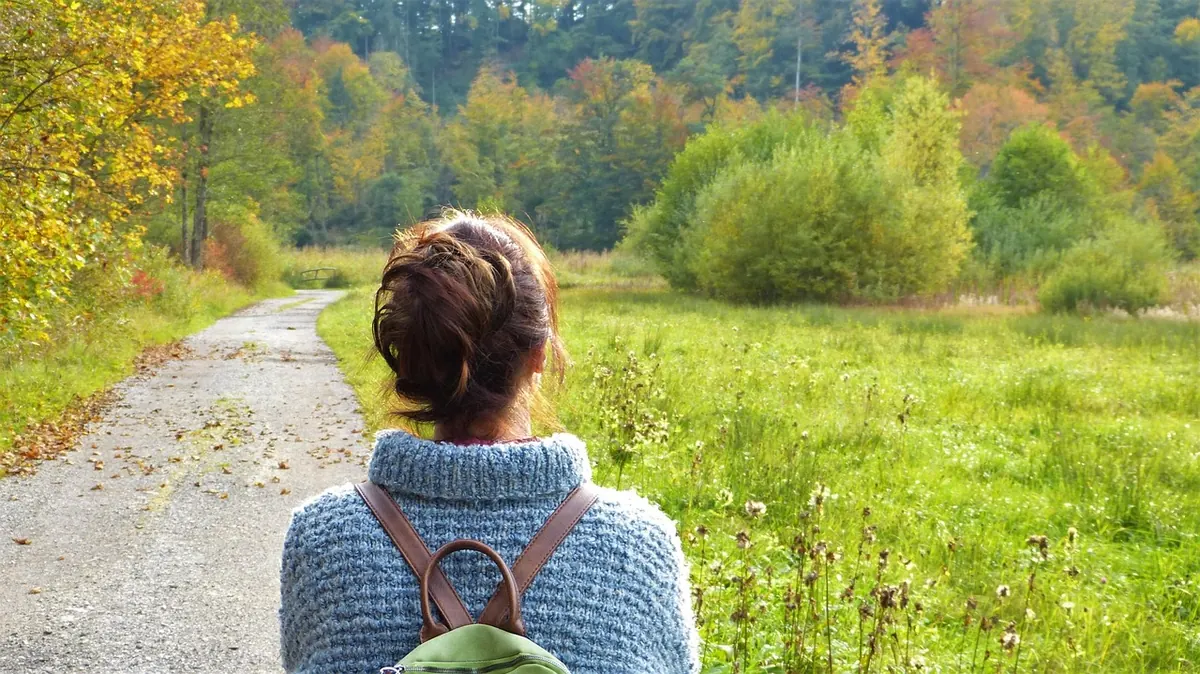
Photo: silviarita / Pixabay