The first warm week of March usually changes everything at Salice Della Torre. The box hedges stop looking grey at the edges, the rosemary along the upper terrace fills with bees, and the stone underfoot finally begins to dry after months of holding the damp. Spring here is not a single event but a sequence — roughly ten weeks in which the garden changes character three or four times. That means the visit you plan matters almost as much as the visit itself: a morning in late March is a different place from an afternoon in mid-May. What follows is a working checklist for choosing your moment, packing sensibly, and noticing more once you are through the gate.
Reading the Season: Three Springs in One
Ask three people who visited in the same fortnight what the garden looked like and you may get three different answers. From March to June the place moves quickly, and the changes tend to come in broad phases rather than a steady slide.
Early spring: structure and bare bones
This is the garden with its bones showing. Clipped hedges and the geometry of the paths are at their most legible because the growth that softens them has not yet started. Expect damp ground, long shadows, loud birdsong and small flowers that reward looking down rather than looking up: violets in the grass, early bulbs at the foot of walls, the first blossom on the fruit trees. If you want to understand how the garden is laid out, come now.
Full spring: the fortnight that matters most
Somewhere between the end of March and the middle of April the garden tips. Climbers break dormancy on the pergolas, roses push out their first leaves, and the citrus pots come back onto the terraces once the risk of a hard frost has passed. Gardeners in this part of Italy will tell you the last serious frost usually falls in the second half of March or the first days of April — true often enough to plan around, but not a guarantee, which is why the pots sometimes go out and come back in again.
Late spring: fullness, fragrance and shade
By mid-May the garden is at its most generous and least formal. Roses are open, the first heat settles into walled corners by midday, and visitors start hunting for shade rather than sun. The trade-off is that everything is briefly crowded and the light is flatter. Come early if you want the paths to yourself.
What to Look For: A Bloom Checklist
Rather than a list of species to tick off, it helps to read the garden in layers. Work upward from the ground and you will notice far more than by scanning the borders for colour.
- Grass and lawn margins. Violets, daisies and the first wild strawberry flowers; the unmown edges are often the most interesting part of a spring lawn.
- Wall feet and step edges. Bulbs naturalised where the soil stays cool, aubrieta and other trailing plants spilling over stone, and ferns uncurling in the damp corners.
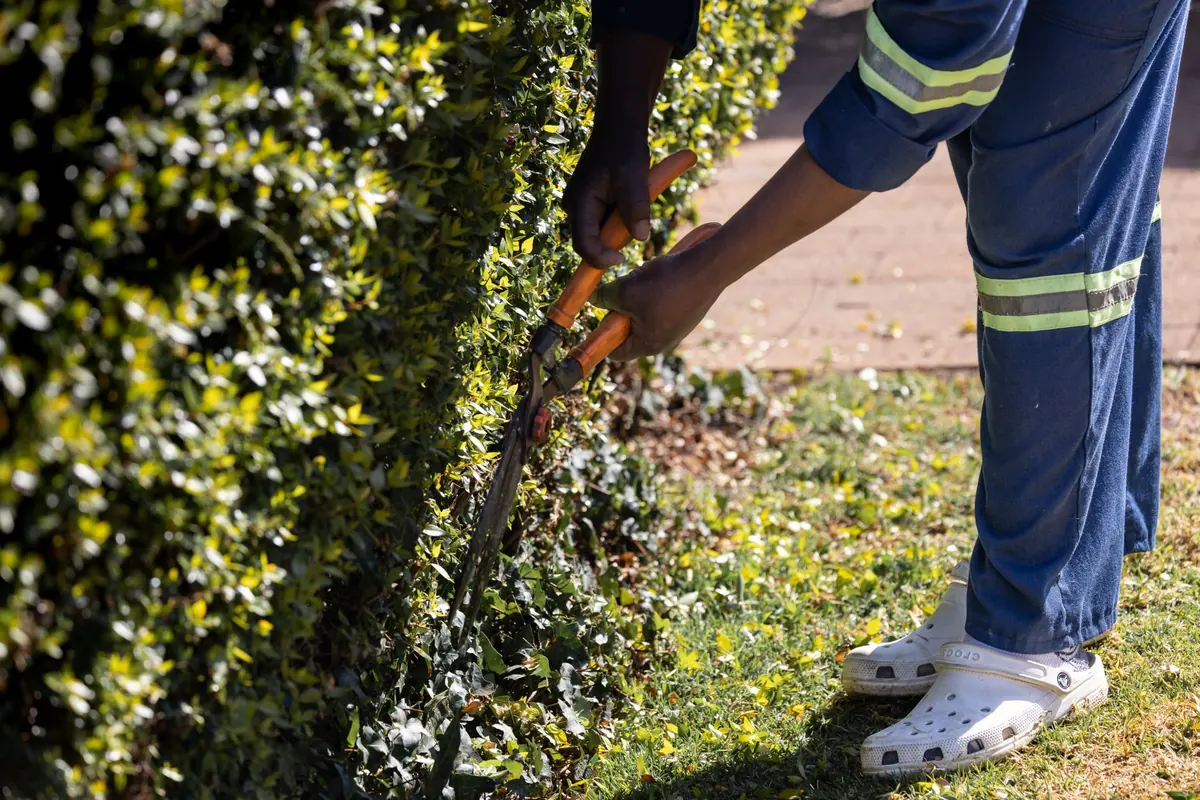
- Hedges and topiary. New box growth appears as a lighter green fringe at the tips — the signal that the shears are about to come out. Once they do, the hedges look sharp for a fortnight.
- Wall shrubs and climbers. Early flowering quince, jasmine starting, and the first of the roses trained flat against warm walls.
- Pots and terraces. Citrus in terracotta, rosemary in full flower, scented geraniums brought back out. Tilt a lemon leaf between finger and thumb and you will smell the whole terrace.
- Pergolas and arches. Wisteria is the headline act of the season, but it is brief — a week to ten days in most years, and wind can cut it shorter.
- Trees. Blossom first, then the leaf. The two weeks between the two are when the garden's shade is at its lightest and the long views are still open.
- The walls themselves. Not a plant, but worth a look: lichen, moss and stonecrop mark which faces catch the morning sun and which stay cold all day.
Weather and Light: What to Plan Around
Spring weather here is genuinely unstable. A warm week can be followed by a cold, clear night, and rain tends to arrive in short heavy bursts rather than settling in for the day. Plan for variety rather than for a forecast.
Morning
The first two hours after opening are the best value of the season. The light comes in low and sideways across the terraces, birdsong is at its loudest, and dew makes the box and the stone smell of themselves. It is also when garden work happens, so expect wheelbarrows and shears rather than a still photograph.
Midday and afternoon
Between about eleven and three, the enclosed parts of the garden can feel considerably warmer than the open ground, and the light flattens. Use the middle of the day for the loggia, the shadier walks and the long views, and save the close planting for later.
Rain and wind
A wet morning is not a wasted one. Fragrance carries further in damp air, the stone darkens and shows its texture, and the snails and birds come out. Wind is the real enemy: it strips blossom and wisteria petals within hours, so if you are coming for a particular plant, go as soon as it opens rather than waiting for a perfect day.
Paths, Steps and the Ground Underfoot
Spring is the season when the garden is at its most beautiful and its most treacherous underfoot. These gardens are built on slopes, and the same drainage that keeps plants alive through winter makes the paths interesting in April.
Loose gravel is usually walkable within hours of rain, but low points hold water longer than you expect. Keep to the crown of the path rather than its edges. Old stone steps grow a thin film of algae and moss over winter that takes weeks to dry out properly; treat every shaded flight as slippery, use the handrail, and take the longer route if you are carrying a child or a heavy bag. Mown grass paths are soft and slow after rain.
One request worth repeating: resist stepping into a border to avoid a puddle. Spring soil is at its most vulnerable, and a single footprint compacts it for the rest of the season. Wear shoes with a real tread, bring a light waterproof layer, and if you use a walking stick, bring it — the lower terraces involve more up-and-down than the map suggests.
Wildlife Worth Slowing Down For
Wildlife in a spring garden is mostly a matter of timing and stillness. The garden does not hide its birds and insects; it rewards people who stop walking for two minutes.
Song is thickest in the first hour. Blackbirds and tits work the hedges, swallows return to hunt over open ground, and on a warm morning you may hear the soft, far-carrying call of a hoopoe from the olive terrace before you ever see it. Bees appear on the first genuinely warm days, working the rosemary and the fruit blossom; bumblebees nest in wall cavities and dry banks, so watch where you put a hand when steadying yourself on a low wall. Sun-warmed stone is a magnet for lizards, which come out mid-morning and will hold still if you approach slowly and stay low. Damp corners hold frogs, and at dusk bats cross the open ground.
Binoculars are useful but not essential. Patience is. Stand still with your back to the sun, look at wall tops and hedge lines rather than at the path, and let the garden come to you. Keep dogs close and on the lead where asked, and never handle wildlife — a lizard picked up for a photograph rarely comes back to the same wall.
Before You Set Out
- Check opening times before travelling. Spring is peak maintenance season, and parts of the garden may be closed for pruning, planting or path work. That is normal, not a disappointment.
- Dress in layers. A warm afternoon and a cold morning are entirely compatible in April.
- Bring the right shoes. Tread matters more than style on wet stone.
- Allow at least ninety minutes. The garden rewards a second loop, walked more slowly than the first.
- Carry water and a hat. Shade is plentiful in the formal sections and scarce on the upper terraces.
Come with a checklist in mind, then put it away. The best spring visits tend to be the ones where a single wisteria truss, a wet stone wall full of lizards or an unexpected patch of violets in the grass quietly takes over the morning.
Photo: Jelena Kazak / Pexels